
THE JOURNAL DESIGN STUDY 01 · 02 / 04

DESIGN STUDY 01

Fringe,
Reimagined

A study in movement and the moment a familiar detail becomes the architecture of a silhouette.

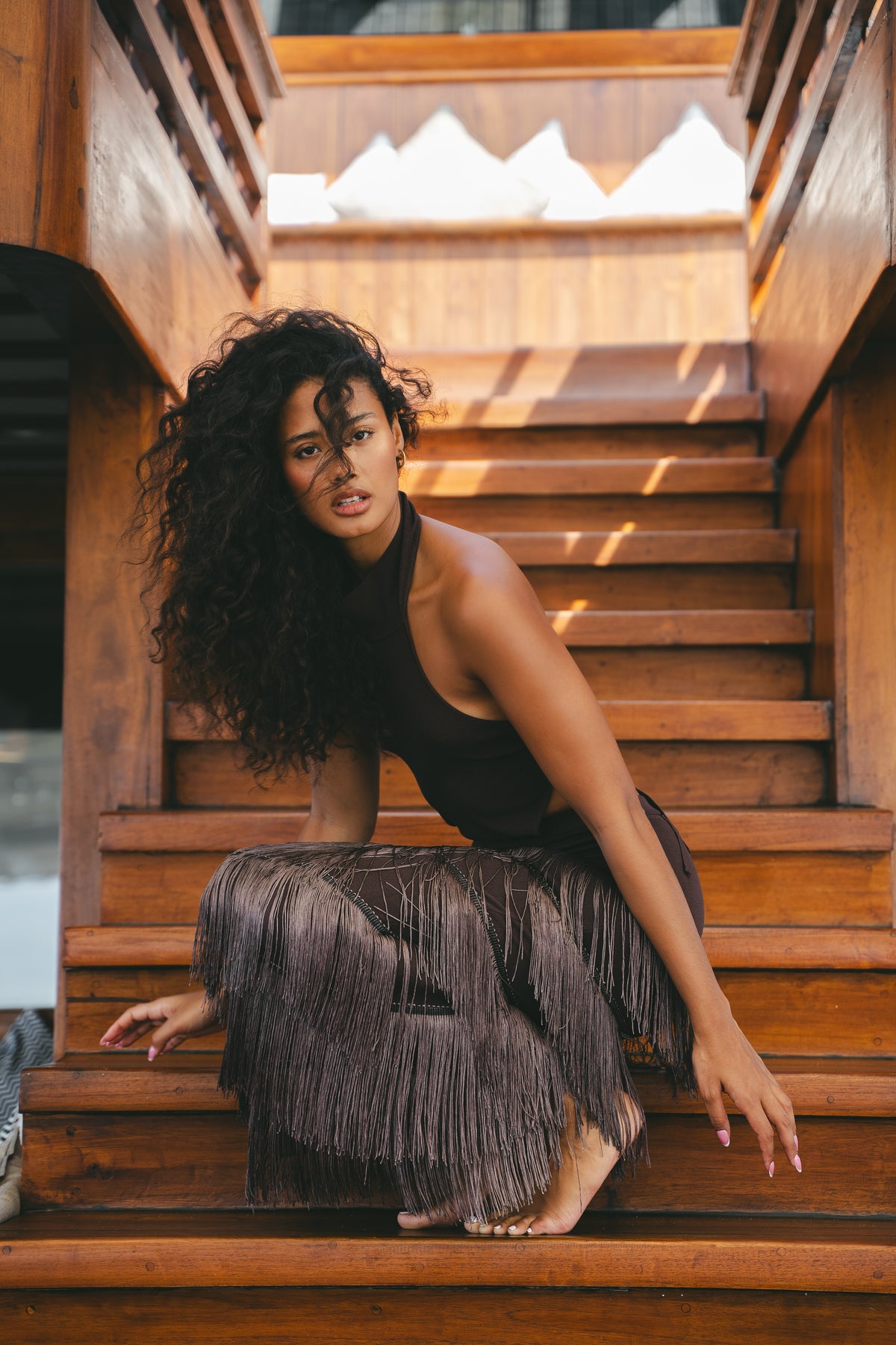
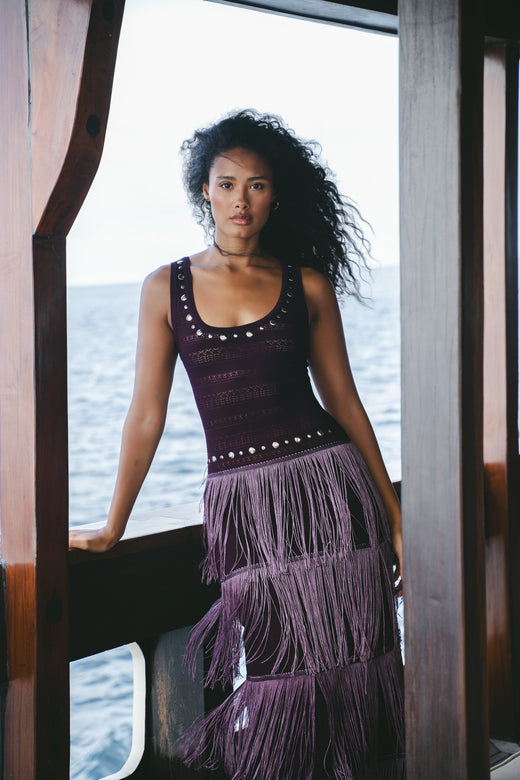
Full-length front view of the mulberry Fringe Knit Maxi Dress on a boat deck
01 · LAYERED WEIGHTFringe Knit Maxi DressVIEW PIECE
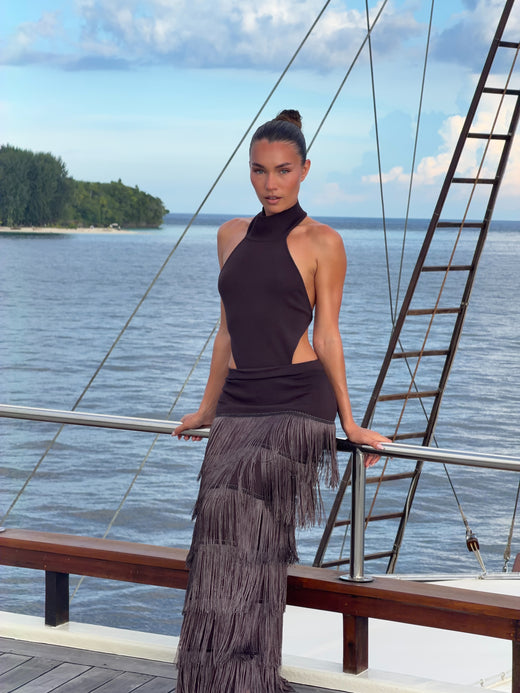
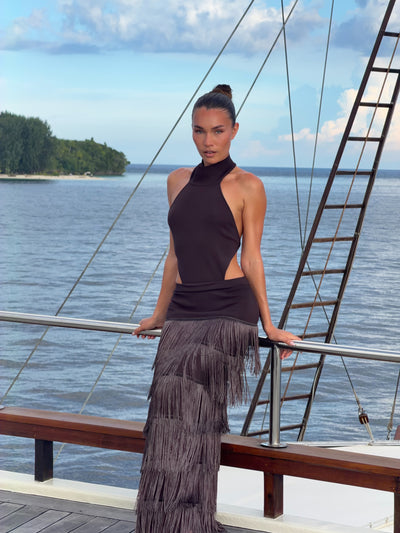
Full-length view of the Halter Fringe Maxi Dress with sculpted cut-outs and layered fringe
02 · SCULPTED RELEASEHalter Fringe Maxi DressVIEW PIECE
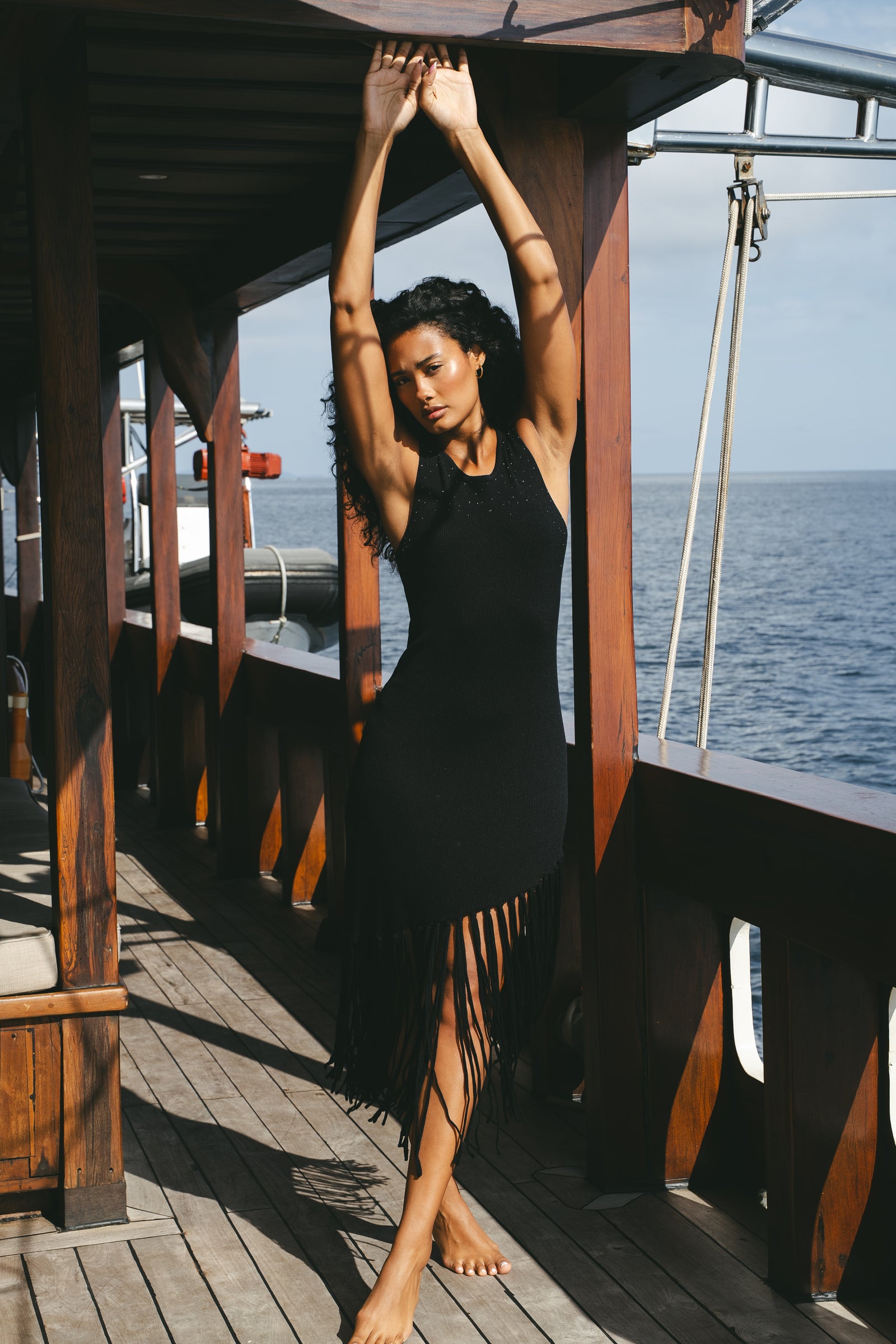
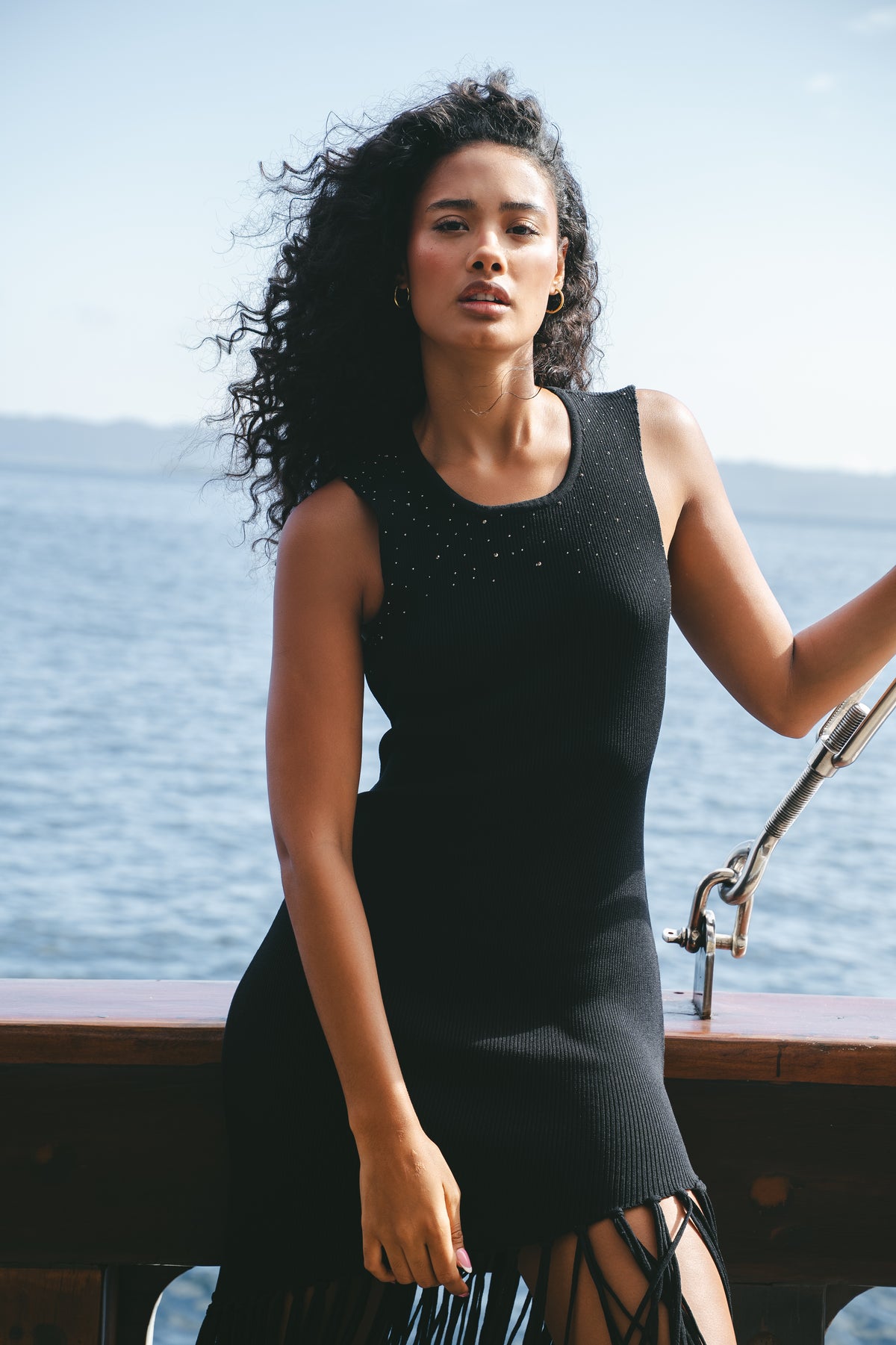
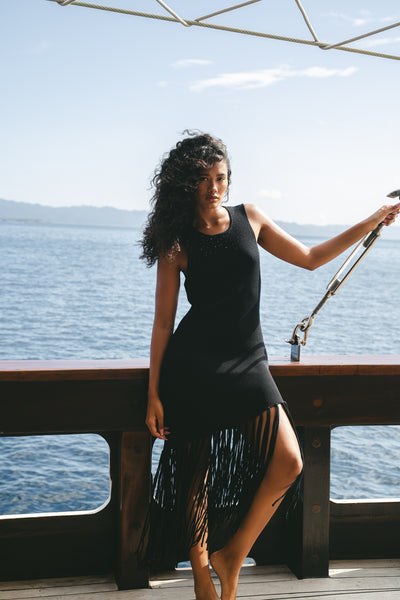
Full-length view of The Open Back Fringe Dress with its asymmetric fringe hem
03 · ASYMMETRIC MOVEMENTThe Open Back Fringe DressVIEW PIECE

Fringe is usually read as an addition. Here, it becomes the idea itself.

The question was not how to decorate a finished shape, but how movement could determine that shape from the beginning. Strands interrupt a hemline, extend the body and hold the trace of every step. The garment is never visually still, even when the person wearing it is.

That shift from ornament to structure changes the way fringe is placed, weighted and allowed to fall. It asks for restraint. Too little movement and the material feels incidental; too much and the silhouette disappears. The tension lives between the two.

02 · WEIGHT

Movement needs resistance.

The character of fringe begins with weight. A strand should not float away from the body; it should answer it. The pause at the top of a step matters as much as the sweep that follows.

Placed against close-knit structures and precise cutouts, that motion feels deliberate rather than decorative.

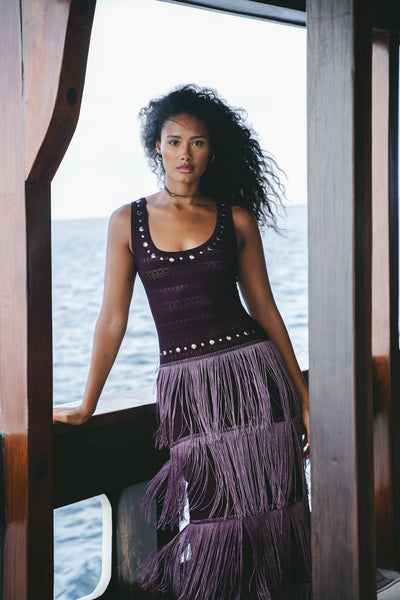
Profile view of the mulberry Fringe Knit Maxi Dress showing the full layered fringe silhouette
Fringe Knit Maxi DressWEIGHT IN LAYERS · VIEW PIECE
Side view of the mulberry Fringe Knit Maxi Dress showing the tiered fringe and knit structure
STUDY 01WEIGHT AND LAYER · VIEW PIECE
I

Weight

Enough substance to follow the body, settle cleanly and make each movement legible.

II

Placement

Fringe begins where the silhouette needs extension, not wherever an empty surface permits it.

III

Release

Controlled structure above; freedom below. The contrast gives the motion its presence.

Movement is not the finishing detail. It is the material.
FRINGE, REIMAGINED · SEEN STUDIOS JOURNAL
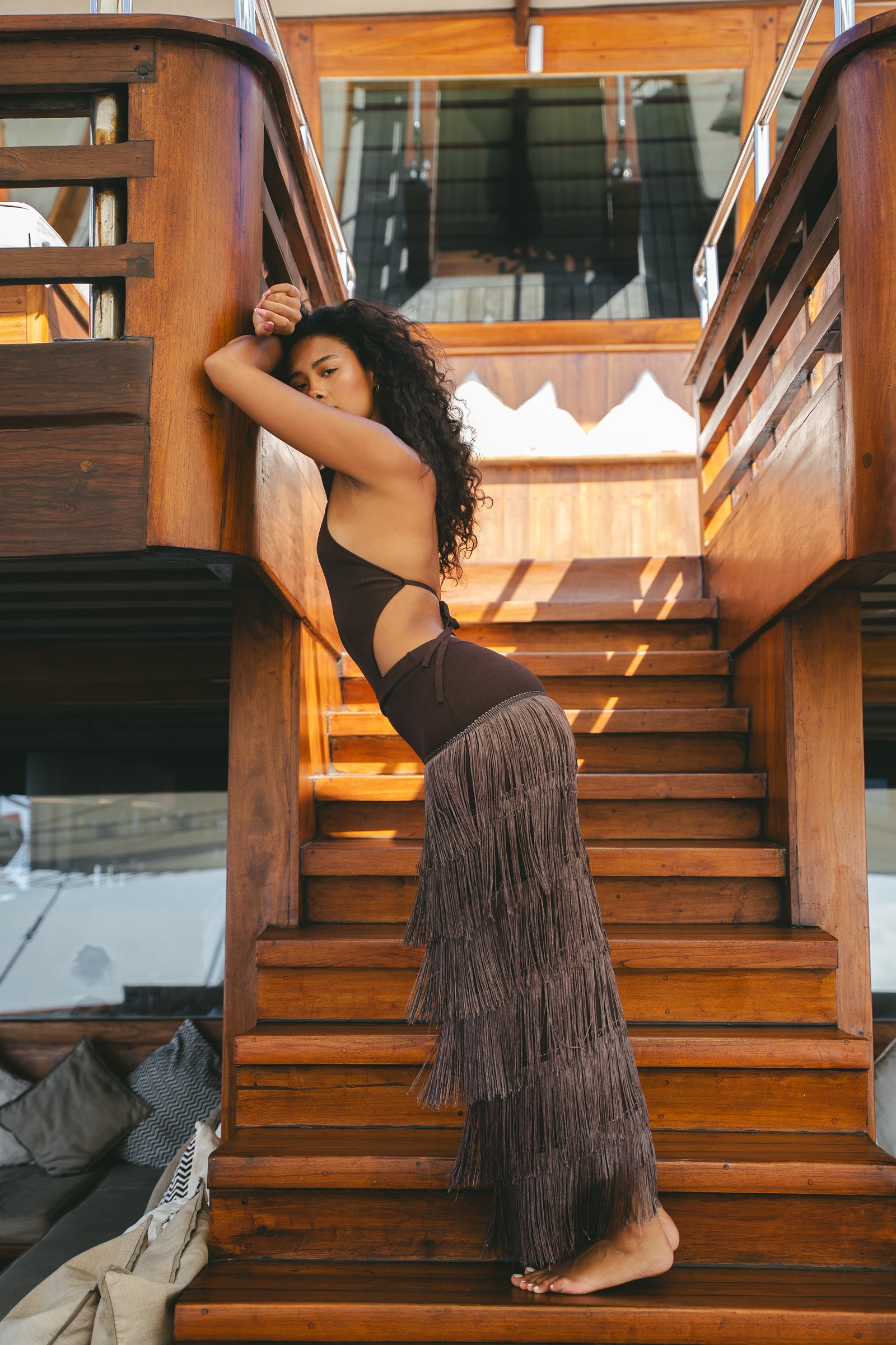
Side view of the Halter Fringe Maxi Dress showing the open cut-outs and long fringe silhouette Halter Fringe Maxi DressRHYTHM IN SILHOUETTE · VIEW PIECE Seated detail of the Halter Fringe Maxi Dress showing the layered fringe in motion STUDY 02FRINGE IN RELEASE · VIEW PIECE

The body completes the design.

A still photograph shows proportion. Motion reveals intention. As the wearer turns, the fringe separates into lines, gathers again and redraws the edge of the garment.

The halter line remains controlled while the lower silhouette changes from moment to moment. That contrast is what creates presence: precision held against release.

The result is not fringe applied to a dress. It is a dress understood through fringe.

A familiar language, made newly precise.

Reimagining does not require making the recognizable unrecognizable. It means stripping away habit: questioning where a material belongs, what it contributes and whether it has earned its place.

In the debut collection, fringe becomes a line drawn through motion, one that changes the silhouette without compromising its clarity.

Full-length view of The Open Back Fringe Dress showing its asymmetric fringe hem The Open Back Fringe DressTHE ASYMMETRIC RELEASE · VIEW PIECE Closer view of The Open Back Fringe Dress showing the shimmer knit and asymmetric fringe STUDY 03FRINGE REDUCED TO ONE LINE · VIEW PIECE
NEXT STORY · 03 / 04 From Sketch
to Silhouette